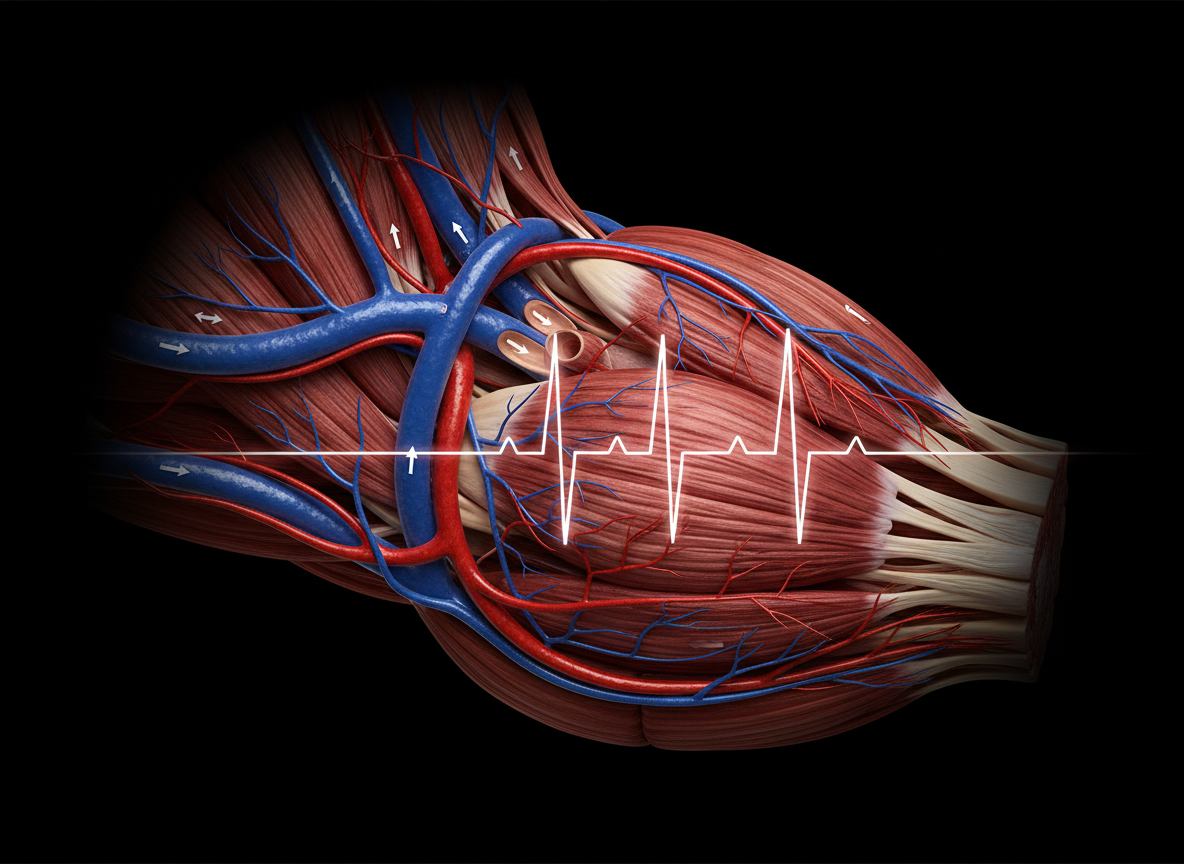
Have you noticed that every drop of blood that reaches your feet has to make a journey back up to your heart?
Your heart is above your feet. Gravity is working against you and wants the blood to stay in your legs.
So how does blood travel up to the heart?
The veins in your legs contain tiny one-way valves. These valves allow blood to move upward but prevent it from falling back down.
Your calf muscles play an important role here. They are so important that doctors often call them your second heart.
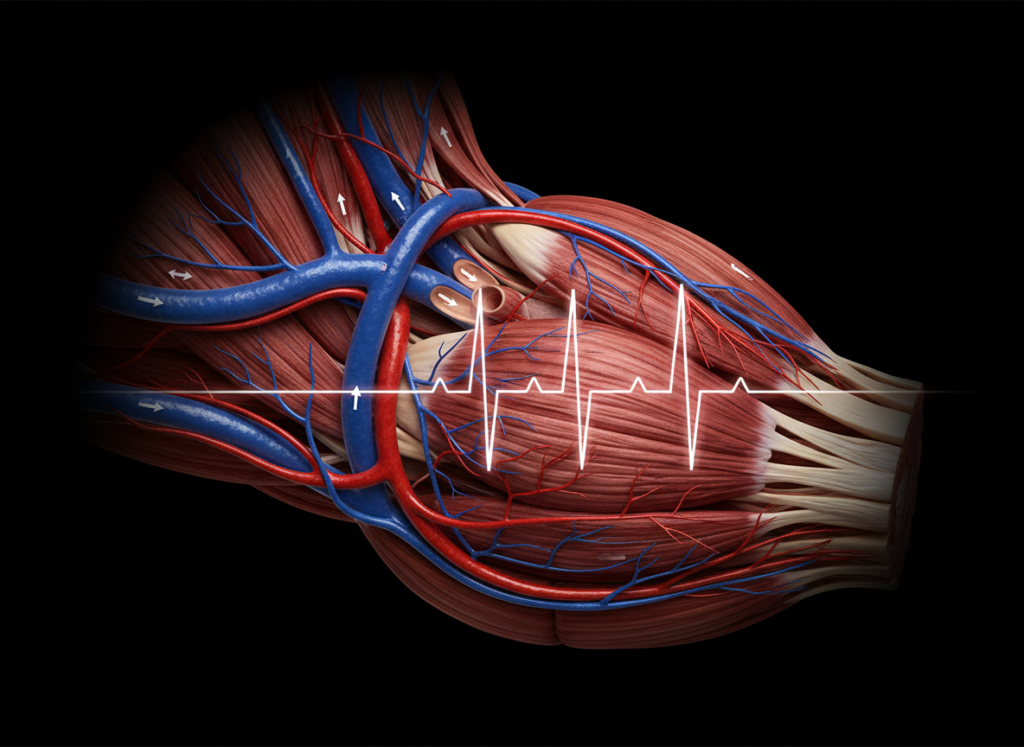
At first, that sounds like an exaggeration. After all, the calf doesn’t beat like the heart. It doesn’t have chambers or valves.
So why does it deserve such a title?
Let us understand the mechanism in detail.
Calf muscles – your second heart
Imagine what happens every time you take a step to walk.
Your calf muscles contract.
As they contract, they squeeze the deep veins running through them, pushing blood upward. The one-way valves open to let blood through and then close behind it, preventing it from slipping back.
Every single step becomes a gentle pump.
This is the calf muscle pump.
Without it, blood would pool in the legs.
It is a team work
In reality, the heart can only pump the blood that returns to it.
If more blood returns to the heart, the heart fills better.
A well-filled heart pumps more blood with each beat.
That’s why walking doesn’t just exercise the heart.
It actually helps the heart by sending more blood back to it.
Your calf muscles and your heart work as a team.
Your calf muscles are glucose-hungry
Every time your calf muscles contract, they need energy.
One of their favourite fuels is glucose.
During muscle contraction, the muscles begin pulling glucose out of the bloodstream.
Think of your muscles as factories.
When you’re sitting, the factory is almost closed.
When you’re walking, the factory doors open.
Glucose enters.
It is burned for energy or stored for later.
This is one reason why a simple 10–20 minute walk after a meal can help reduce the rise in blood sugar.
The calf muscles aren’t just improving circulation.
They’re helping clean excess glucose out of the bloodstream.
Conclusion
Even a few minutes of walking, heel raises or ankle movements every hour can reactivate the calf muscle pump.
When you walk,
– Your calf muscles pump blood back to the heart.
– They consume glucose.
– They improve circulation.
– They help the heart pump more effectively.
Remember, walking isn’t simply an exercise.
Every step is a conversation between your muscles, your veins, your heart and your metabolism.
If you have liked what you have read, take a few steps and remember to thank your second heart!